The Complete UK Guide to Buying a Modular or Prefab Home
By the The Modular Home Review team
Updated 2026
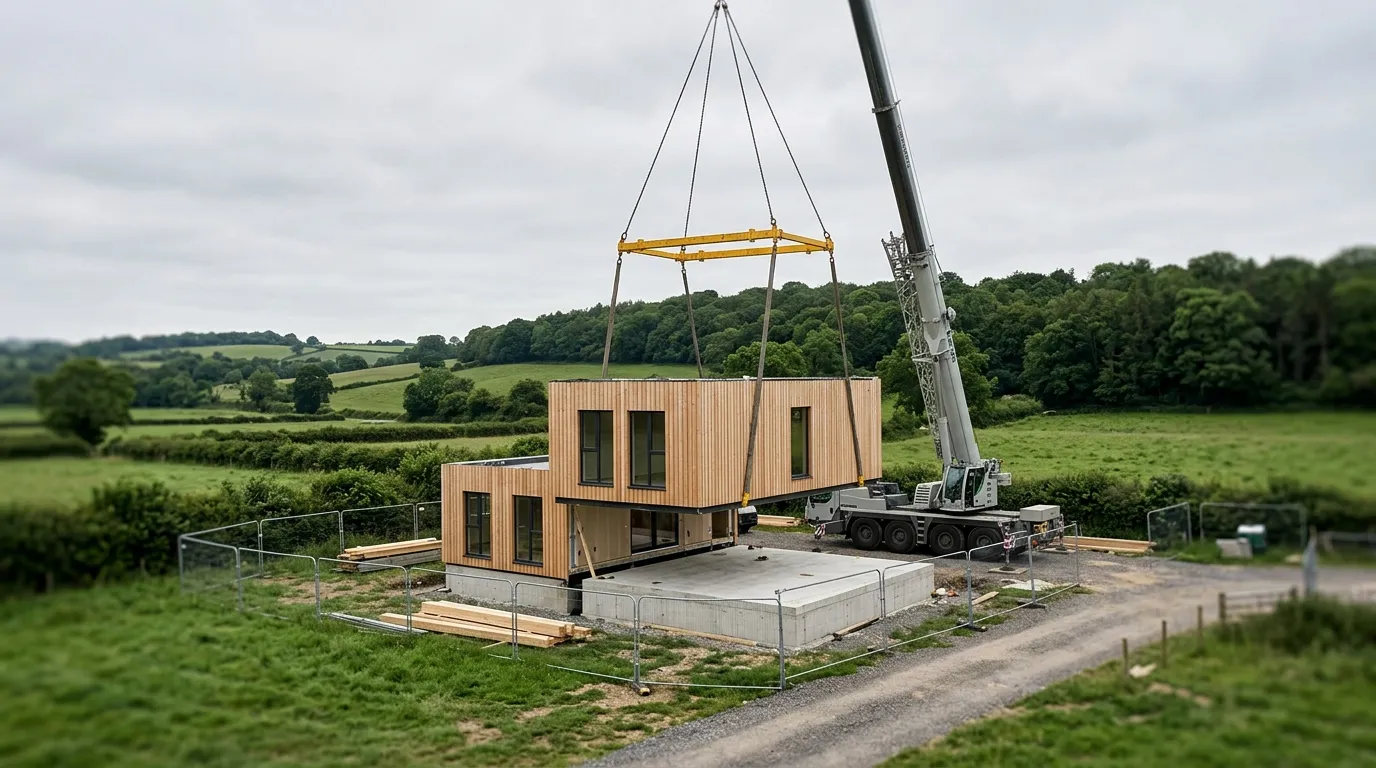
Buying a modular home in the UK works much like buying any new house, with two differences: most of the building is finished in a factory before it reaches your plot, and lenders and surveyors treat it as “non-standard construction”. You still need planning permission and Building Regulations approval for a permanent dwelling, you still need a recognised structural warranty for most mortgages, and you can still reclaim VAT if you are a self-builder. This guide walks through every stage, from choosing a plot to getting the keys.
A modular home (sometimes called a prefab, off-site or volumetric build) is constructed as one or more three-dimensional sections in a controlled factory, then transported and craned into position on prepared foundations. That is different from a “flat-pack” or panellised kit, where flat wall and roof panels are assembled on site. Both fall under Modern Methods of Construction (MMC), and both have to meet the same legal standards as a brick-and-block house.
How modular differs from a traditional build
The end result is a permanent, mortgageable home that has to satisfy the same rules. What changes is the process and where the work happens.
| Factor | Modular home | Traditional brick and block |
|---|---|---|
| Where it is built | Mostly in a factory, then craned on site | Entirely on site |
| Build speed once on site | Days to a few weeks for the shell | Months |
| Weather delays | Minimal during factory stage | Common |
| Planning permission | Required for a permanent dwelling | Required |
| Building Regulations | Apply in full | Apply in full |
| Mortgage view | Non-standard construction, fewer lenders | Standard, most lenders |
| Warranty | Needs a recognised scheme (NHBC, etc.) | Needs a recognised scheme |
| Snagging window | Same legal protections | Same legal protections |
Most of the construction takes place off site, which is why factory builds typically cut the total programme by around 30 to 50 per cent compared with a like-for-like traditional build. The trade-off is that you commit to the design earlier, because changing a module after it has been manufactured is expensive.
Step 1: Find land and check the rules
Before you fall for a particular house design, secure a plot and understand what you are allowed to do with it. The structure may arrive ready-made, but the ground it sits on still has to be assessed, levelled and given proper foundations.
Things to confirm on any plot:
- Planning history and constraints. Is the land in a conservation area, green belt, an Area of Outstanding Natural Beauty, or near a listed building? Each adds restrictions.
- Access for delivery. Modules arrive on a low-loader and are lifted by crane. A tight lane, low bridge or overhead cables can make delivery impossible or costly.
- Services. Check whether mains water, electricity, gas, drainage and broadband already reach the plot, or what it costs to connect them.
- Ground conditions. A ground survey tells you what foundation type you need. Poor or sloping ground means more groundwork.
If you are building on land next to a neighbour, you may also have duties under the Party Wall etc. Act 1996, for example when excavating foundations close to a boundary structure. Serve notice in good time to avoid disputes.
For a plain-English starting point on what land can be developed, read our guide to finding and assessing a self-build plot.
Step 2: Planning permission
A modular home is treated as a permanent dwelling, so in almost all cases you need full planning permission, exactly as you would for a traditional house. The build method does not exempt you. Permitted development rights, which allow some changes without a full application, rarely cover a brand-new standalone home, so do not assume you can skip this.
The Planning Portal confirms modular homes are “now becoming the preferred choice for self-builders” but still pass through the normal permission process; national rules apply, with extra local rules on top. Always check with your local planning authority before committing.
A typical full planning decision takes around eight to fifteen weeks once a valid application is submitted, and longer if your site is in a sensitive area or attracts objections. Budget time for this, because a manufacturer cannot start your modules until the design is locked and consent is in hand.
Useful official reference: the Planning Portal guide to modular homes.
Step 3: Building Regulations
Planning permission controls what your home looks like and where it sits. Building Regulations control how it is built: structure, fire safety, insulation, ventilation, drainage and energy performance. Both apply to a modular home in full, regardless of where the modules were made.
Two practical points:
- Reputable manufacturers design their systems to meet current Building Regulations, including the tightened fire-safety, ventilation and energy standards, and provide the certification a Building Control body needs.
- You still need Building Control sign-off for the on-site works: foundations, connections, drainage and final completion. Factory certification does not replace it.
Ask any supplier to show you, in writing, how their system meets Building Regulations and which Building Control route they use.
Step 4: Mortgages for modular homes
This is where modular buyers hit the most friction. Lenders class modular construction as “non-standard”, so the high-street default is caution. Many mainstream lenders will still lend, but the property usually needs to tick specific boxes, and a chunk of lenders will decline outright.
What lenders typically want to see:
- A recognised structural warranty (more on this below).
- A construction system that is accredited or accepted by a body the lender trusts.
- A surveyor’s valuation that confirms the home is mortgageable and re-sellable.
If you are funding the build in stages rather than buying a completed home, you are likely looking at a self-build mortgage. These release money in stages, often need a larger deposit than a standard residential mortgage, and involve more checks on the plot, the build cost and your finances. A broker who knows MMC and self-build is worth their fee here, because they know which lenders accept which systems.
For a fuller breakdown of stage payments and deposits, see our self-build and modular mortgage guide.
Step 5: Warranties and accreditation
A recognised warranty is the single thing that most affects whether you can mortgage, insure and later sell a modular home. It covers structural defects, typically for ten years, with the builder responsible for fixing problems in the first couple of years and the warranty covering major structural issues after that.
The schemes lenders commonly accept include:
- NHBC Buildmark, the largest new-home warranty provider in the UK.
- Premier Guarantee and LABC Warranty.
- BOPAS (Buildoffsite Property Assurance Scheme), an accreditation specifically for off-site and modern methods of construction, assessed by Lloyd’s Register and BLP for durability over a 60-year design life.
A manufacturer does not always need BOPAS to obtain warranty cover; NHBC, LABC and Premier Guarantee run their own system-review and accreditation routes for innovative systems. The important thing is that the home ends up with a warranty your chosen lender will accept. Confirm this before you sign anything.
You can check accepted systems directly on the NHBC technical certificates page.
Step 6: Costs and what drives them
Costs vary widely by manufacturer, size, specification and ground conditions, so treat any single figure with suspicion. The honest answer is that a modular home is usually a little cheaper than an equivalent traditional build, with savings often coming from speed, less waste and fewer weather delays rather than from cut-price materials.
Budget for the things beyond the house price, which catch people out:
- Land purchase and any legal or survey fees.
- Groundworks and foundations, which are done on site and depend on your ground survey.
- Services connections for water, power, gas, drainage and broadband.
- Crane and delivery, including any road access works.
- Planning and Building Control fees, plus professional fees for architects, engineers or a project manager.
Get a clear, itemised quote that states exactly what is and is not included. “Turnkey” can mean very different things between suppliers.
Step 7: Reclaiming VAT as a self-builder
If you are building a new home for yourself to live in, not to rent out or sell on, you can usually reclaim VAT on eligible building materials through HMRC’s DIY Housebuilders Scheme. New-build homes are zero-rated for VAT, and this scheme puts self-builders in a similar position to someone buying a finished new house from a developer.
Key points to plan around:
- You claim using HMRC form VAT431NB for a new build.
- For builds completed on or after 5 December 2023, you have six months from completion to submit the claim.
- You can claim VAT on materials incorporated into the home, but generally not on professional fees, and labour from a VAT-registered contractor on a new build should be zero-rated rather than charged and reclaimed.
- Keep every invoice. The claim lives or dies on your paperwork.
Read the official rules in HMRC’s VAT Notice 431NB.
A realistic order of events
- Find and secure a plot, with delivery access and services checked.
- Commission a ground survey and an outline design.
- Apply for planning permission and wait for the decision.
- Arrange finance: a self-build or modular-friendly mortgage via a specialist broker.
- Confirm the warranty scheme your lender will accept.
- Lock the design and place the manufacturing order.
- Carry out groundworks and foundations while modules are built in the factory.
- Deliver, crane and assemble the modules; complete on-site connections.
- Get Building Control completion sign-off and snag the property.
- Submit your VAT reclaim within the deadline.
Frequently asked questions
Do modular homes need planning permission in the UK? Yes. A permanent modular dwelling needs full planning permission in almost all cases, the same as a traditional house. The factory build method does not exempt you, and permitted development rights rarely cover a new standalone home. Always check with your local planning authority first.
Can you get a mortgage on a modular or prefab home? Often yes, but lenders treat modular as non-standard construction, so the pool is smaller and the home usually needs a recognised structural warranty and an accepted construction system. Some mainstream lenders do lend on modular homes; a broker who knows MMC and self-build will find the right one.
Do Building Regulations apply to modular homes? Fully. Structure, fire safety, insulation, ventilation, drainage and energy standards all apply regardless of where the modules were made. Reputable manufacturers certify their system to current standards, and you still need Building Control sign-off for the on-site works and final completion.
How long does it take to build a modular home? The factory shell can be produced and craned on site in days to a few weeks, and the overall programme is typically 30 to 50 per cent shorter than an equivalent traditional build. The biggest time variable is usually planning permission, which often takes around eight to fifteen weeks for a decision.
What warranty should a modular home have? One your lender accepts. Common schemes include NHBC Buildmark, Premier Guarantee and LABC Warranty, plus BOPAS accreditation for off-site systems. Cover usually runs for ten years, with the builder responsible for defects in the early years. Confirm the warranty before signing with any manufacturer.
Can I reclaim VAT on a self-built modular home? If it is a new home you intend to live in, yes, through HMRC’s DIY Housebuilders Scheme using form VAT431NB. New builds are zero-rated, and for completions on or after 5 December 2023 you have six months from completion to claim. Keep all your material invoices.
Before you commit
Buying a modular home rewards planning ahead more than almost any other route to a new house, because so many decisions are baked in once the factory order is placed. Get the plot, planning, finance and warranty lined up before you commit to a design, and lean on specialists for the mortgage and the VAT reclaim. Do that, and you get a fast, low-waste build with the same legal protections as any other new home in the UK.
Independence note
We buy or borrow access to the builds we cover and accept no payment from manufacturers for reviews. If that ever changes on a given piece, we tell you at the top.
More from The Modular Home Review
All articles →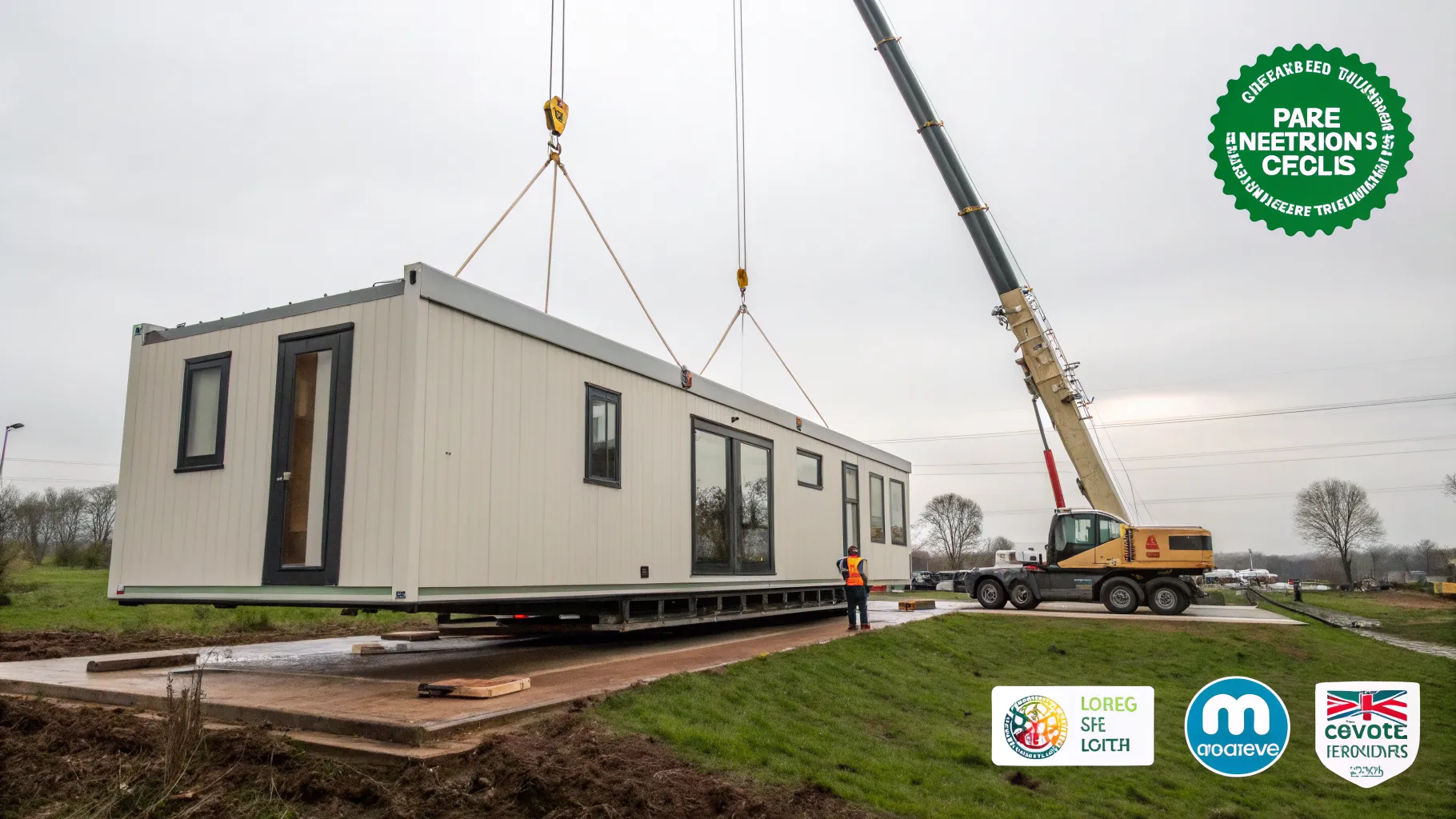
How Much Does a Modular Home Cost in the UK? 2026 Price Breakdown Per m2
Modular home cost UK: a 2026 per m2 breakdown covering the module, groundworks, connections, planning and the hidden extras most quotes leave out.
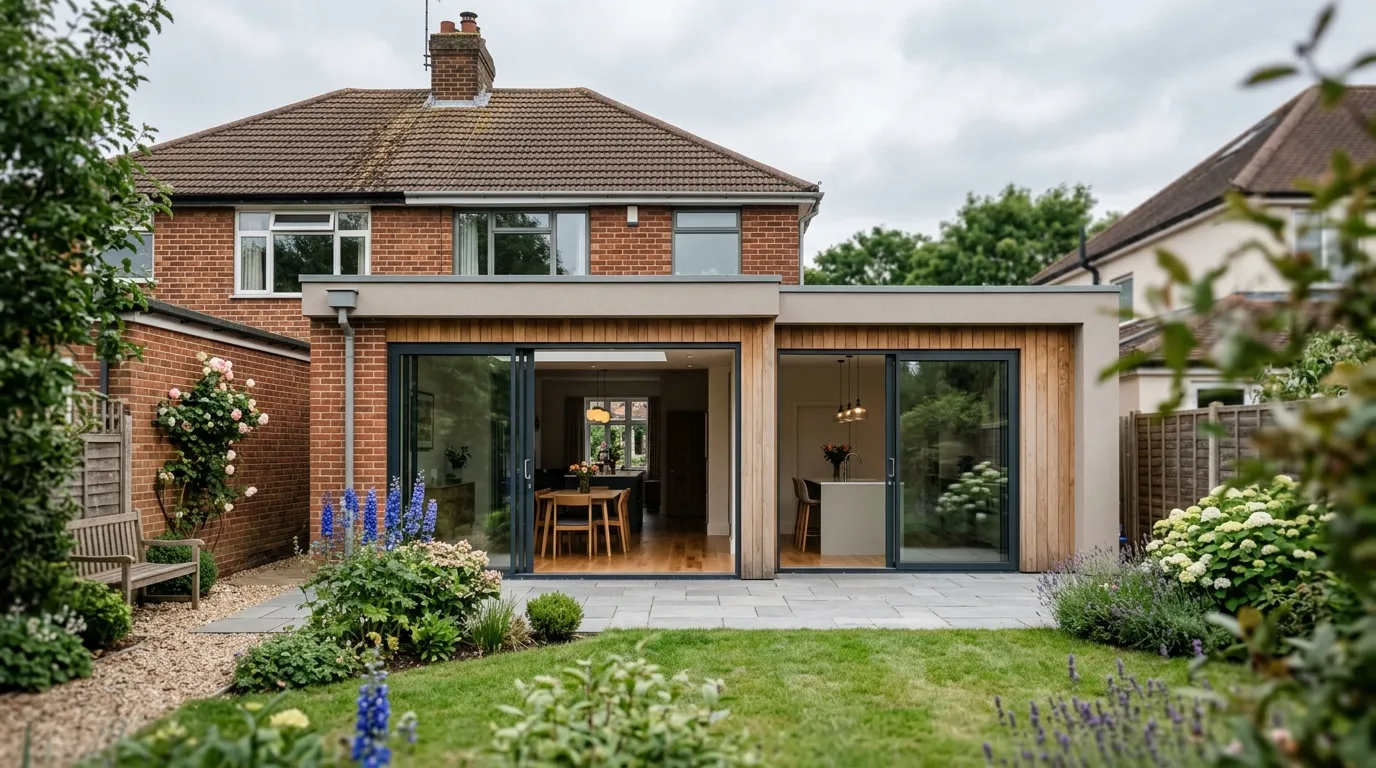
Do You Need Planning Permission for a Modular Extension? UK Rules Explained
Most modular extensions fall under permitted development and need no planning permission. Here are the UK size limits, prior approval and building regs rules.
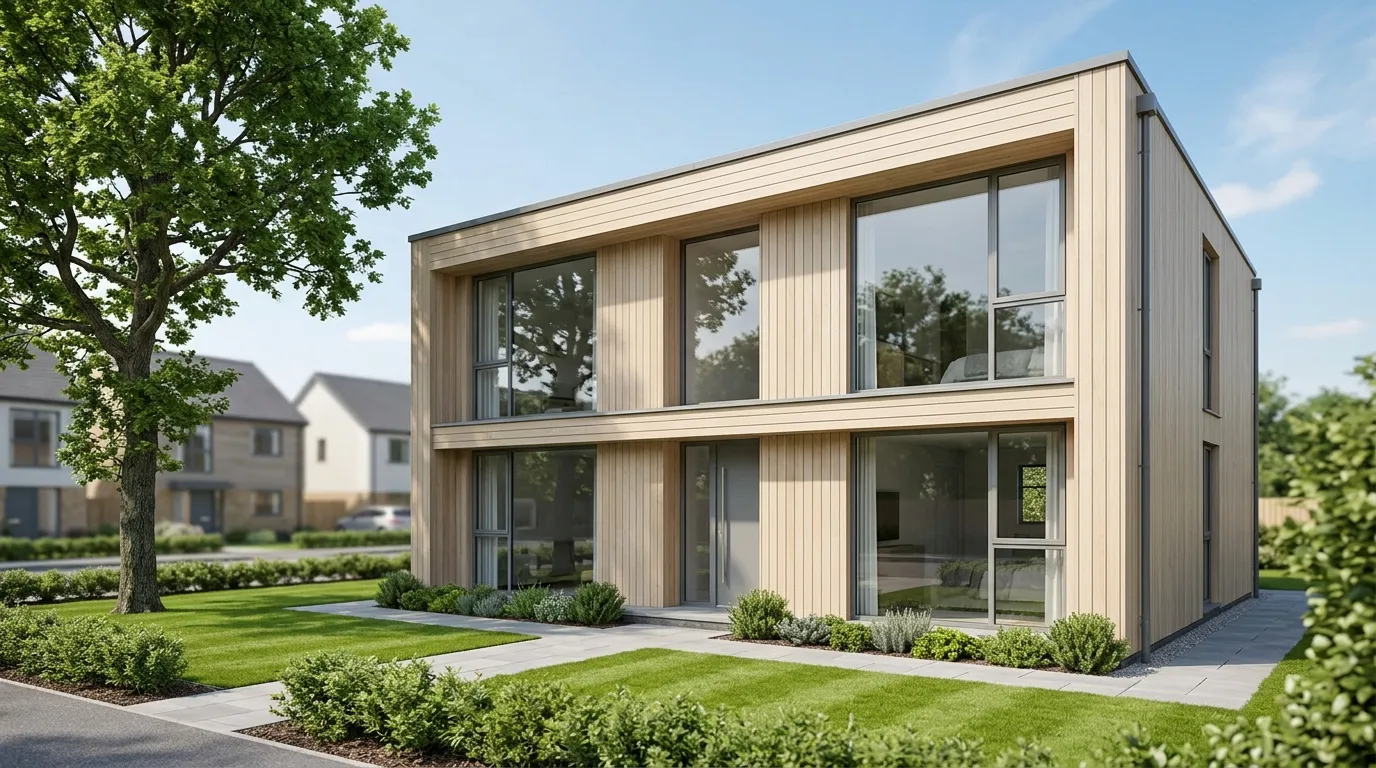
Can You Get a Mortgage on a Prefab House? UK Lender Guide for 2026
Yes, you can get a prefab house mortgage in the UK. Here is which lenders accept them, the deposit you need, and the certificates that make or break your case.