How Long Does It Take to Build a Modular Home?
By the The Modular Home Review team
Updated 2026
If you are asking how long to build a modular home, the honest answer has two parts: the construction itself is genuinely fast, but the whole journey from decision to moving in takes longer than the headline “built in days” claims suggest. The building work can be a matter of months rather than a year or more, yet planning and design sit in front of it. This guide sets out a realistic timeline for each stage so you can plan properly rather than be disappointed.
The short version
Once you have planning permission, a modular home typically takes around 3 to 7 months to build, compared with roughly 6 to 18 months for a traditional site-built house. Add the earlier planning and design stages and the full journey from first decision to move-in is more commonly 9 to 12 months or so, depending on your site and how bespoke the design is. The build is quick; the run-up is where the time really goes.
Stage 1: Design and planning (8 to 13 weeks)
This is the part people forget when they hear “built in a week”. Before anything is manufactured you need a finalised design, planning permission and Building Regulations sign-off. Planning and Building Regs applications can run in parallel, and together they typically take around 8 to 13 weeks, sometimes longer if your site is sensitive or the application is contested.
Crucially, factory production usually only starts after planning approval, because changing a design once modules are in production is extremely expensive. So this stage is not dead time, it is the foundation of the whole timeline. You can confirm what consent your project needs on the government’s planning permission guidance. If you have not yet secured a plot, our guide to buying land for a modular self-build covers that step, which can add time of its own.
Stage 2: Factory manufacture (4 to 16 weeks)
Here is where modular earns its reputation. Around 90% of a modular home is built inside a factory before a single module reaches your site. Because it is indoors, this stage is not held up by weather.
- Off-the-shelf or standard designs: roughly 4 to 10 weeks depending on size.
- Bespoke designs: up to around 16 weeks, depending on complexity.
The great advantage is that this factory build can happen at the same time as your site is being prepared, which is the single biggest reason modular is faster overall.
Stage 3: Groundworks and foundations (a few days to a few weeks)
While the factory builds your home, contractors prepare the site. The time this takes depends entirely on the ground:
- Ground screws: often just 1 to 3 days.
- Level, simple sites (traditional foundations): commonly 3 to 7 days, up to about two weeks.
- Sloping, complex sites or basements: 2 to 4 weeks or more.
Because this runs in parallel with manufacture, it usually does not add to the overall timeline unless your ground is difficult. The choice of foundation also affects cost, which we cover in our modular home cost guide.
Stage 4: Delivery and assembly (1 to 3 days)
This is the dramatic bit you see in videos. Once the modules are finished and the foundations are ready, the modules are craned into place and connected. For most homes the on-site assembly takes just 1 to 3 days. A house that looked like an empty plot on Monday can be weathertight by the end of the week.
Stage 5: Finishing and commissioning (a few weeks)
Assembly is not quite the finish line. After the modules are joined there is still work to do: connecting services (water, drainage, electricity, gas or heat pump), completing joins between modules, external finishes, landscaping and final inspections and sign-off. This typically takes a few more weeks before you can move in.
Why modular is faster than traditional building
The headline reasons are simple:
- Parallel working. The factory builds your home while your site is prepared. Traditional building is sequential; you cannot lay bricks before the foundations are done.
- Weather-proof manufacture. Indoor construction removes the rain delays that stall conventional sites.
- Controlled, repeatable process. Factory conditions and standardised methods reduce errors and rework.
The trade-off is that modular front-loads the decisions. You commit to the design early and cannot easily change your mind mid-build, which is exactly why the planning and design stage matters so much.
Frequently asked questions
How long does it take to build a modular home in the UK? The construction itself, once planning is approved, usually takes around 3 to 7 months. Including design, planning permission and Building Regulations beforehand, the full journey from decision to move-in is more typically 9 to 12 months, depending on your site and how bespoke the design is.
How long does the factory take to build a modular home? Standard or off-the-shelf designs generally take about 4 to 10 weeks in the factory, while bespoke designs can take up to around 16 weeks. Around 90% of the home is completed in the factory before it reaches your site, and this happens at the same time as your groundworks.
How quick is the on-site assembly of a modular home? Very quick. Once the modules are finished and the foundations are ready, craning the modules into place and connecting them usually takes just 1 to 3 days. Finishing, connecting services and sign-off then add a few more weeks before you can move in.
Is a modular home really faster than a traditional build? Yes, typically around half the time on site. The main reason is that the factory builds your home while your plot is prepared in parallel, and indoor manufacture avoids weather delays. Traditional building is sequential and weather-dependent, so it takes longer.
What causes delays in a modular home build? The most common causes are planning permission taking longer than expected, difficult or sloping ground that slows foundations, late design changes, and service connections. Because factory production only starts after planning approval, delays at the planning stage push back the whole timeline.
Independence note
We buy or borrow access to the builds we cover and accept no payment from manufacturers for reviews. If that ever changes on a given piece, we tell you at the top.
More from The Modular Home Review
All articles →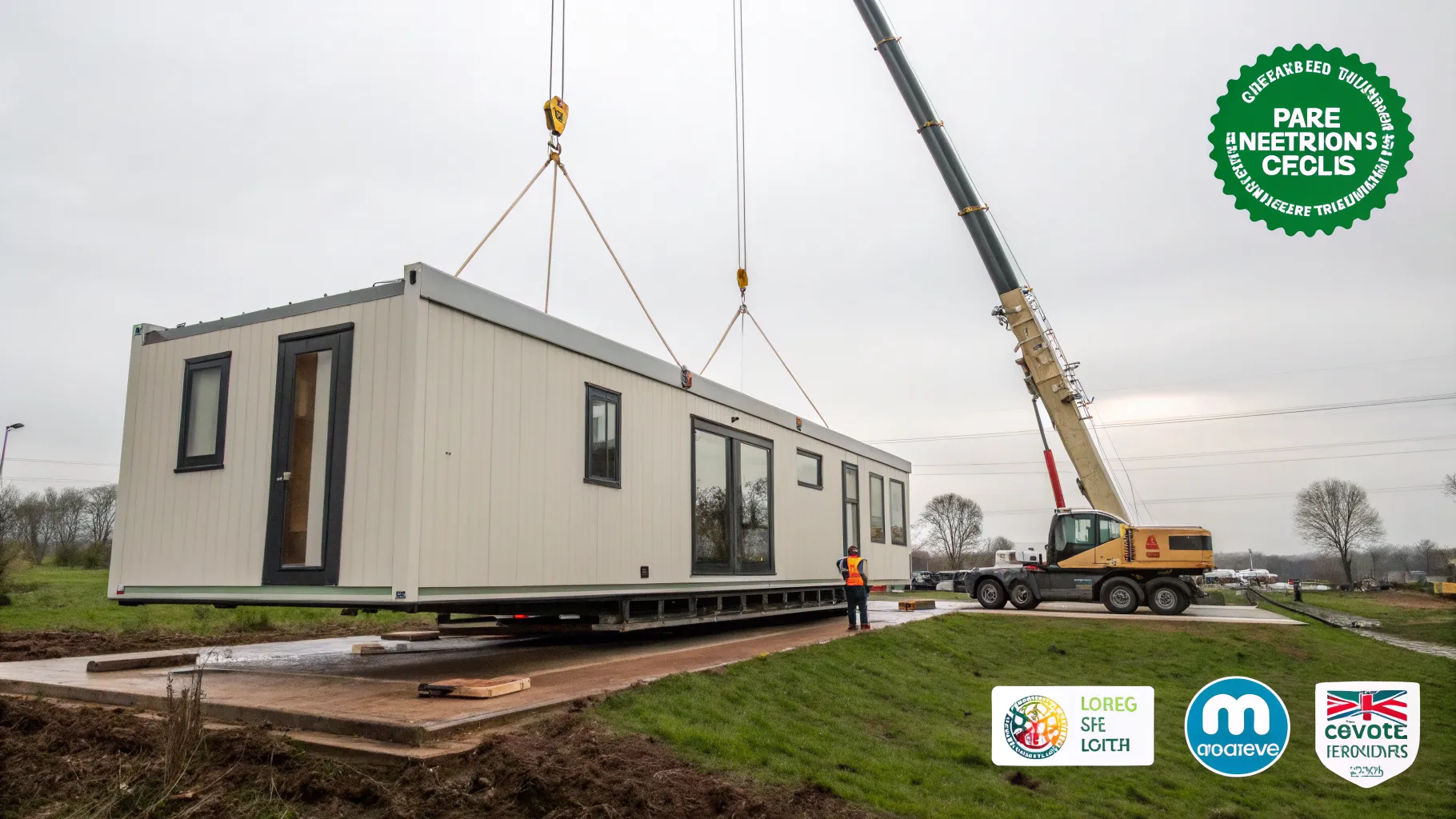
How Much Does a Modular Home Cost in the UK? 2026 Price Breakdown Per m2
Modular home cost UK: a 2026 per m2 breakdown covering the module, groundworks, connections, planning and the hidden extras most quotes leave out.
Do You Need Planning Permission for a Modular Extension? UK Rules Explained
Most modular extensions fall under permitted development and need no planning permission. Here are the UK size limits, prior approval and building regs rules.
Can You Get a Mortgage on a Prefab House? UK Lender Guide for 2026
Yes, you can get a prefab house mortgage in the UK. Here is which lenders accept them, the deposit you need, and the certificates that make or break your case.