What's the Real Cost of a 3 Bedroom Prefab House in the UK?
By the The Modular Home Review team
Updated 2026
Ask three suppliers what a 3-bedroom prefab house costs and you will get three answers that look nothing alike. One quotes a low per-square-metre rate for a bare shell. Another quotes a turnkey figure that quietly assumes you already own the land and the ground is flat. The honest answer for a finished, habitable 3-bed of roughly 100 to 130 square metres lands around the high £200,000s once foundations, site preparation, utility connections and standard interior fittings are in (figure from MyJobQuote’s 2026 flat-pack cost guide). That number assumes you already have a plot. The land is separate, and it is usually the biggest swing factor of all.
This page breaks the real cost into the parts a single headline figure hides, then builds one transparent worked example so you can see where the money actually goes.
The headline cost, and why it is only half the story
For a 3-bed prefab in the 100 to 130 square metre range, two reliable benchmarks bracket the cost:
- An all-in build of roughly the high £200,000s, including foundations, site prep, utilities and standard fittings (MyJobQuote, 2026).
- A general UK build-cost cross-check puts a 3-bed in the low-to-mid £200,000s up to the mid £300,000s, based on £1,750 to £3,000 per square metre (Urbanist Architecture).
Both of those exclude the land. They also assume a normal plot. If your site needs a long access road, tricky drainage, a retaining wall or piled foundations, the groundworks alone can move several tens of thousands of pounds before the house even arrives.
The cost per square metre is the figure suppliers lean on, so it pays to know the two tiers that matter most:
| Scope | Cost per m² | What it includes |
|---|---|---|
| Basic “skin” only | £170 to £300 | The factory shell. No foundations, utilities, plumbing, electrics, fixtures, flooring or decorating. |
| Finished home, ready to live in | £1,500 to £3,000 | A complete habitable home. The lower band is a modest self-managed build; the upper band is contractor-led or high-spec. |
Source: MyJobQuote. The “skin only” rate is the one that traps people. A quote can look astonishingly cheap because it is pricing the panels leaving the factory, not a home you can live in. Always ask what scope a per-square-metre figure covers before you compare it to anything.
For the full per-square-metre breakdown across house sizes, see our modular home cost guide.
Manufacturer benchmarks for a real 3-bed
To ground those rates in named products, here are three established manufacturers benchmarked at a 3-bed, 100 to 130 square metre size. These figures come from MyJobQuote’s comparison table, not from the manufacturers’ own quotes, so treat them as indicative rather than fixed.
| Manufacturer | Indicative price (3-bed, 100 to 130 m²) | Per m² | Build time |
|---|---|---|---|
| Baufritz | £150,000 to £195,000 | ~£1,500 | ~14 weeks |
| Scandia-Hus | £180,000 to £234,000 | ~£1,800 | ~15 weeks |
| Huf Haus | £240,000 to £312,000 | ~£2,400 | ~20 weeks |
Worth noting: Huf Haus itself publishes no fixed price categories, since every house is designed bespoke and priced after the design stage. The figure above is MyJobQuote’s benchmark, not a Huf Haus quote. Use this table to sense-check a supplier, not to hold them to a number.
A worked “all-in” example for a 110 m² 3-bed
Here is the part most cost pages skip. Take a 110 square metre 3-bed, built contractor-led, and follow the money from factory floor to finished home. The percentages for professional fees and consents below are the clean allowances recommended by Urbanist Architecture.
- Module build cost. 110 m² at a mid-market finished rate gives you the core build cost. This covers the factory-made structure, internal systems and standard fittings.
- Groundworks and foundations. Site clearance, the foundation slab or footings, drainage runs. On a benign plot this is a contained cost; on a sloping or poor-ground site it can balloon.
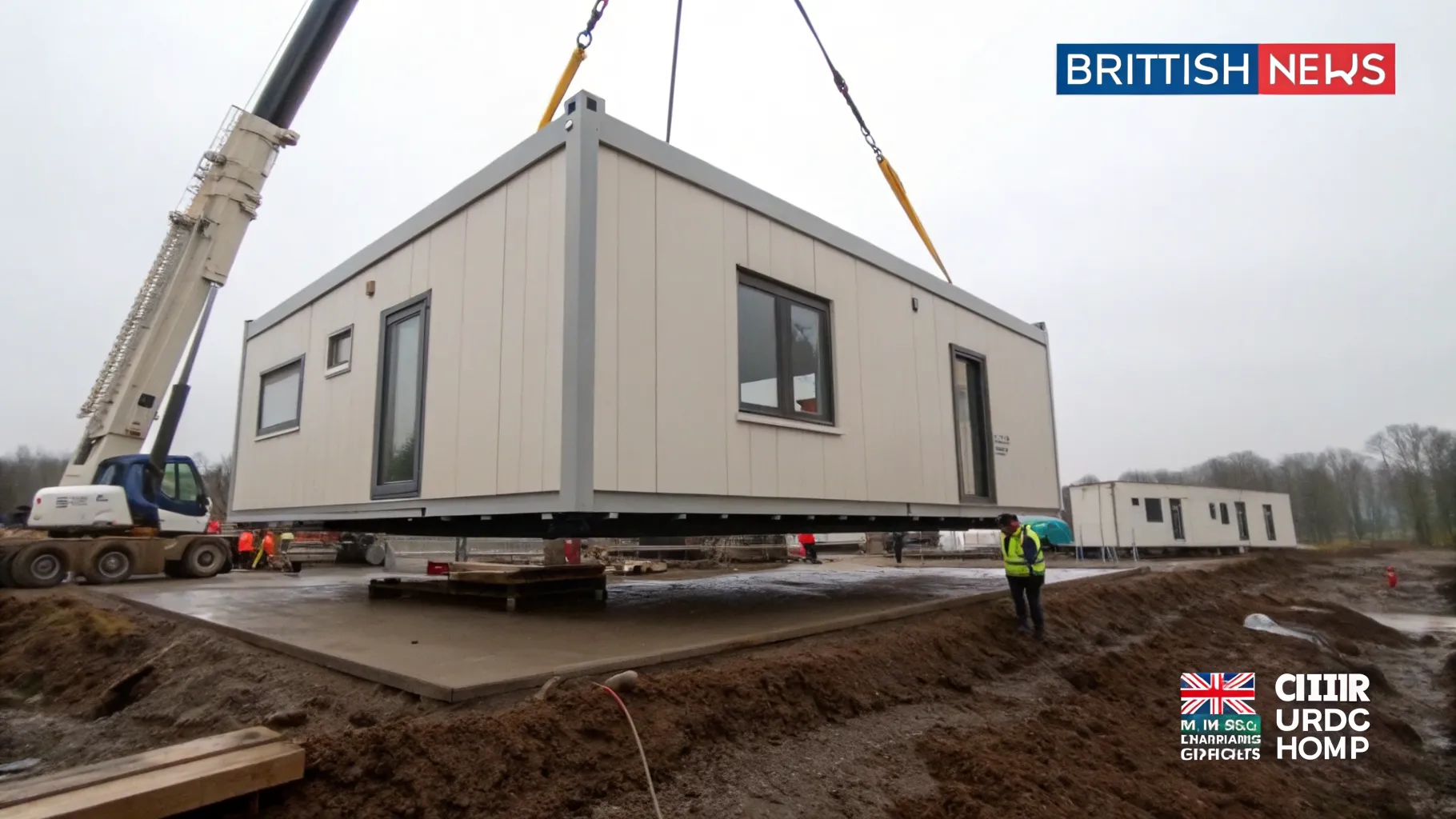
- Delivery and crane. Moving modules to site and craning them into position. Typically a few days of work, but access constraints (narrow lanes, overhead cables) push it up.
- Utility connections. Mains water, electricity, gas where used, and broadband. These are charged by the utility providers and are easy to forget at quote stage.
- Professional fees: add 15% of build cost. Architect, structural engineer, project managers and miscellaneous consultants.
- Statutory consents and contingency: add 8% of build cost. Planning fees, Building Regs, and a buffer for the surprises every build throws up.
Run that sequence and the “real” number sits comfortably above the bare per-square-metre figure a salesperson first mentions, which is exactly why the title of this page asks about the real cost. To pressure-test your own version, our modular home cost calculator lets you plug in floor area and finish level.
Land: the cost everyone underestimates
None of the figures above include the plot. Land is the single largest variable in the whole exercise and it has nothing to do with the house. A serviced plot in a cheaper region is a different planet from one in the South East. Before you fall in love with a model, price the land separately and confirm it has, or can get, planning permission for a dwelling. A prefab house on a plot with no residential consent is just an expensive ornament.
Is a prefab actually cheaper than brick?
Usually, yes, by around 10% to 20% versus an equivalent traditionally-built house, sometimes more. The saving sits in the factory-built portion: the walls, roof, floors and services are made in controlled conditions, faster and with less waste. Groundworks, utilities and finishing still cost broadly what they would for any house. We compare the two methods in detail in are modular homes cheaper than brick and modular vs traditional build.
VAT: the saving most cost pages get wrong
A new self-build dwelling is zero-rated for VAT, which is a genuine and sizeable saving, but the mechanics matter and many guides state them incorrectly.
- If a VAT-registered contractor builds your new home, they should already zero-rate their labour. There is nothing for you to “reclaim” on that portion, because you were never charged it.
- If you are building it yourself, you reclaim the 20% VAT on materials through HMRC’s DIY Housebuilders’ Scheme (form VAT431NB). Some energy-saving items qualify at a reduced 5% rate, also reclaimable.
- The claim window is tight: within 6 months of completion for builds completed on or after 5 December 2023.
Read the rules from the source before you budget on them, at GOV.UK’s guide to VAT refunds for building a new home. Do not assume you can recover labour VAT; in most contractor-built cases there was none to begin with.
Mortgages and the Help to Build scheme
You can mortgage a modular home, but a standard residential mortgage usually will not fit a build-from-scratch project. Most people use a self-build mortgage, which typically covers up to around 75% of land and build costs, releases funds in stages as the build hits each phase, and carries higher interest rates than a standard mortgage. High-street lenders rarely offer these; specialist brokers and lenders do. Our prefab house mortgage guide walks through how the staged drawdowns line up with a modular programme.
One correction worth flagging, because many ranking pages are out of date: the government’s Help to Build: Equity Loan in England is now closed to new applications. You can no longer apply for it, confirmed on GOV.UK. Budget without it.
How long does it take, and how long does it last?
Expect 3 to 6 months overall. The factory build phase is short, often 4 to 8 weeks, and the on-site install and craning takes 3 to 10 days. The slow part is usually planning approval, which averages 8 to 15 weeks and runs in parallel with factory work if you sequence it well.
On lifespan, a well-built modern modular home is designed to last 60 to 100 years or more, comparable to traditional construction. Cheaper panel systems sit lower, often 30 to 50 years with maintenance. We cover the detail in how long do modular homes last.
Frequently asked questions
How much does a 3-bedroom prefab house cost all-in? For a finished 3-bed of around 100 to 130 square metres, budget in the region of the high £200,000s including foundations, site prep, utilities and standard fittings, on a normal plot. That figure excludes the land, and a tricky site can push it higher.
Does the price include the land? No. Headline prefab prices almost never include the plot. Land is a separate cost, it is usually the biggest single variable, and you should price it independently and confirm it has planning permission for a dwelling.
Are prefab homes cheaper than brick? Generally around 10% to 20% cheaper for an equivalent house, sometimes more. The saving comes from the factory-built structure and systems; groundworks, utilities and finishing cost much the same either way.
Do prefab houses need planning permission? Yes. A prefab or modular home is a dwelling like any other and needs full planning permission, plus it must meet current Building Regulations to be lived in permanently.
Can I get a mortgage on a modular home? Yes, usually through a self-build mortgage that releases funds in stages and covers up to about 75% of land and build costs. Specialist lenders and brokers handle these rather than most high-street banks.
Can I reclaim VAT on a self-build modular home? If you build it yourself, you can reclaim the 20% VAT on materials via HMRC’s DIY Housebuilders’ Scheme, within 6 months of completion. If a VAT-registered contractor builds it, their labour should already be zero-rated, so there is nothing to reclaim on that part.
How long does a prefab house take to build? Around 3 to 6 months overall. The factory build is typically 4 to 8 weeks and craning the modules into place takes a few days; planning approval, averaging 8 to 15 weeks, is usually the longest single step.
Independence note
We buy or borrow access to the builds we cover and accept no payment from manufacturers for reviews. If that ever changes on a given piece, we tell you at the top.
More from The Modular Home Review
All articles →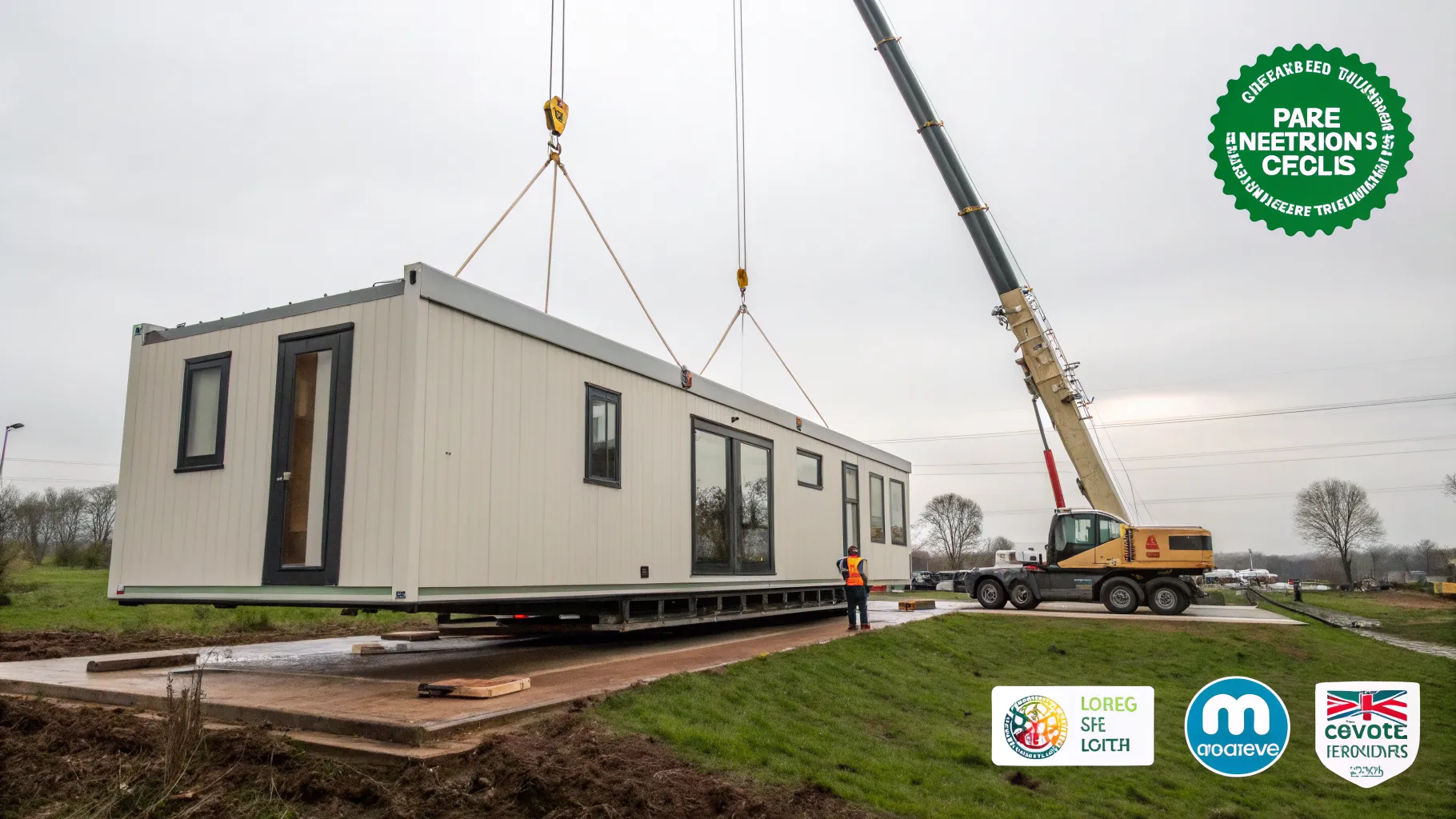
How Much Does a Modular Home Cost in the UK? 2026 Price Breakdown Per m2
Modular home cost UK: a 2026 per m2 breakdown covering the module, groundworks, connections, planning and the hidden extras most quotes leave out.
Do You Need Planning Permission for a Modular Extension? UK Rules Explained
Most modular extensions fall under permitted development and need no planning permission. Here are the UK size limits, prior approval and building regs rules.
Can You Get a Mortgage on a Prefab House? UK Lender Guide for 2026
Yes, you can get a prefab house mortgage in the UK. Here is which lenders accept them, the deposit you need, and the certificates that make or break your case.