Prefab Home Insurance UK: Insuring Non-Standard Construction
By the The Modular Home Review team
Updated 2026
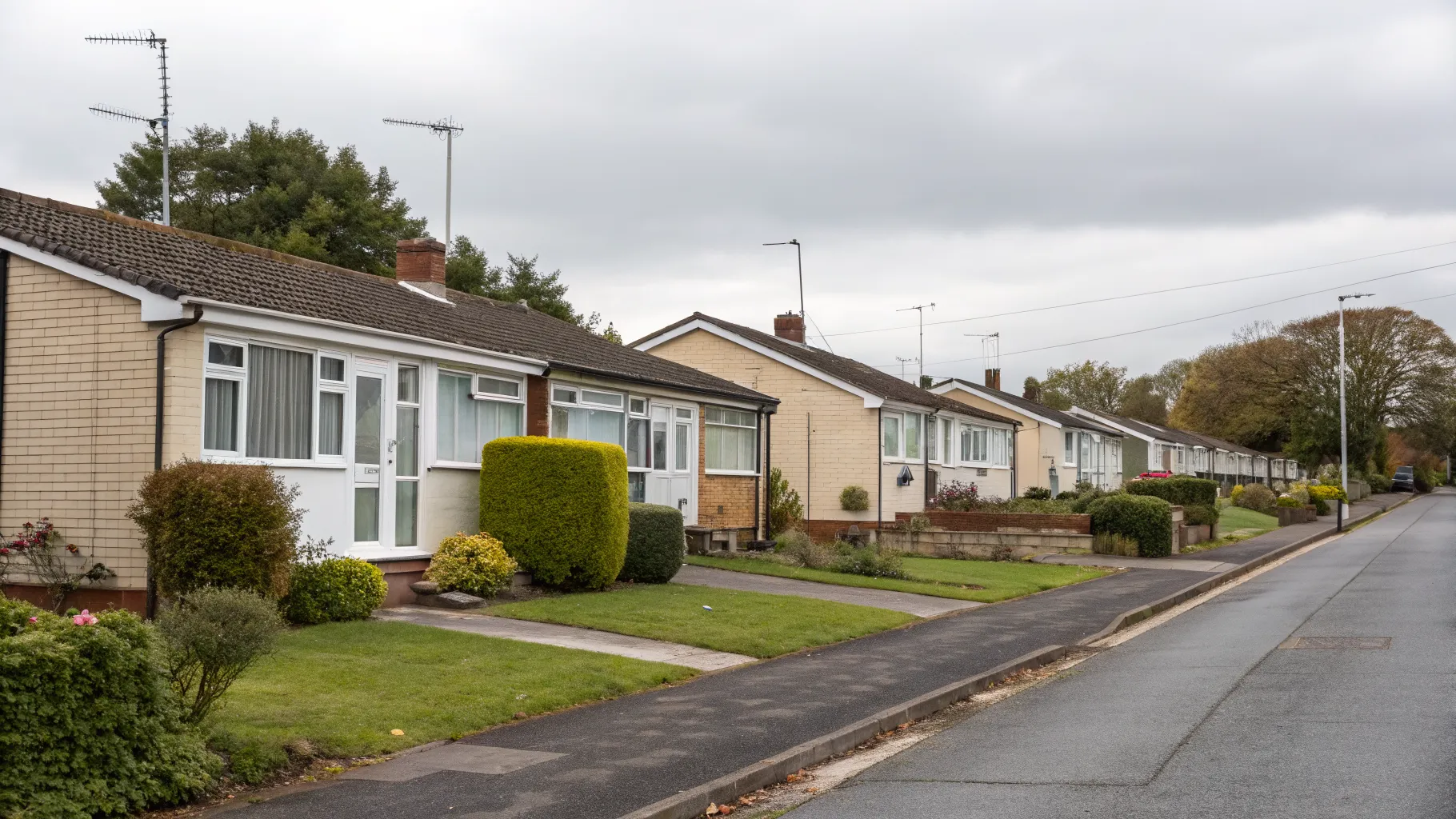
The short answer on prefab home insurance is yes, you can almost always insure a prefab or non-standard construction home in the UK, but rarely through the cheap comparison-site quote you would get for a brick house. Some types need extra paperwork before any insurer will touch them, and one category in particular can be uninsurable until specific repairs are done. Here is how it actually works.
What counts as non-standard construction
A standard home, in insurer language, has brick or block walls and a tiled or slate roof. Anything else is “non-standard”, and that covers a lot of ground: post-war prefab houses, steel-framed homes, BISF houses, Airey and other concrete-panel types, prefabricated reinforced concrete (PRC), timber-frame, and modern modular homes.
Mainstream insurers price for the average brick semi, so they either decline non-standard construction or load the premium heavily. The practical route is a specialist insurer or a broker with access to the non-standard market. Recognised names in this space include Adrian Flux, Intelligent Insurance, Homeprotect and Howden, among others.
Why PRC and concrete prefabs are the hard case
The one type to understand properly is PRC, prefabricated reinforced concrete. Many PRC housing systems were designated as defective under the Housing Defects legislation of the mid-1980s, because the steel reinforcement inside the concrete can corrode and weaken the structure over time. You can read the relevant law on legislation.gov.uk.
The consequence is strict. If a property is a designated defective PRC type, lenders will usually refuse a mortgage and buildings insurers will usually refuse cover, unless the home has been repaired under an approved scheme and has a valid PRC certificate to prove it. That certificate, issued after approved reinstatement, is what makes the home both mortgageable and insurable. Without it, you may find no insurer will offer buildings cover at all.
So before you buy or insure a concrete prefab, the first job is to confirm the exact construction type and whether a PRC certificate exists. This sits alongside the mortgage problem we cover in the prefab house mortgage guide, because the two issues are tightly linked.
Get the construction confirmed first
For any older non-standard home, especially Airey, PRC or other concrete types, a structural engineer or specialist surveyor who can inspect and confirm the construction method is essential before you approach an insurer. Insurers will ask exactly what the walls and roof are made of, and a vague answer gets you a vague or void policy.
One trap catches people out: some concrete and prefab houses have had a brick facade added as external cladding over the years. That brick skin does not change the underlying construction, and you must not declare brick as the sole wall material. Doing so, even innocently, misrepresents the risk and can invalidate a claim when it matters most.
Modern modular homes are a different story
If your “prefab” is a modern modular or timber-frame home rather than a 1950s concrete one, insurance is far more straightforward. These are engineered to current building standards, and many are covered by structural warranties that insurers and lenders recognise, such as schemes accredited through BOPAS. A warranted modern modular home is usually insurable on terms much closer to a standard house than an old defective prefab.
That said, you should still tell the insurer it is modular or timber-frame rather than brick. The premium may be slightly higher, but disclosing it correctly is what keeps the cover valid. Our buying a modular home guide and the piece on how long modular homes last put the longevity and risk questions in context.
What it costs and how to keep it down
Expect to pay more than for an equivalent brick home, because the insurer is pricing a less common and sometimes higher-risk structure. How much more depends heavily on the exact type: a warranted modern modular home is close to standard, while an unrepaired concrete prefab may be near impossible to cover.
To get the best terms: use a specialist broker rather than a mainstream comparison site, have the construction type confirmed in writing, keep any PRC certificate or structural warranty to hand, and disclose everything accurately. Honesty up front costs a little on the premium and saves the whole claim later. If the home has had building work, check that it had the right building regulations approval too, as gaps there can complicate cover.
Frequently asked questions
Can you insure a prefab house in the UK? Yes, in almost all cases, but usually through a specialist insurer or broker rather than a standard comparison-site policy. The exception is a designated defective concrete prefab without an approved repair: insurers will often refuse buildings cover until the home has been repaired and has a valid PRC certificate.
What is a PRC certificate and why does it matter? A PRC certificate proves that a prefabricated reinforced concrete home, designated defective under 1980s legislation, has been repaired under an approved scheme. It is what makes the property both mortgageable and insurable. Without it, lenders typically refuse a mortgage and insurers typically refuse buildings cover.
Is prefab home insurance more expensive? Generally yes, because non-standard construction is a less common and sometimes higher-risk structure to insure. The size of the increase varies a lot: a warranted modern modular home costs close to a standard house, while an older or unrepaired concrete prefab is much more expensive or hard to cover at all.
Do I have to tell the insurer my house is non-standard? Yes, always. You must declare the true construction type, including cases where a brick facade has been added over a concrete or steel structure. Declaring brick as the sole wall material misrepresents the risk and can invalidate a claim, even if the mistake was innocent.
Are modern modular homes hard to insure? No, modern modular and timber-frame homes are usually straightforward to insure, especially when covered by a recognised structural warranty such as a BOPAS-accredited scheme. You should still disclose that the home is modular, but terms are typically much closer to a standard brick house than an old defective prefab.
Independence note
We buy or borrow access to the builds we cover and accept no payment from manufacturers for reviews. If that ever changes on a given piece, we tell you at the top.
More from The Modular Home Review
All articles →
How Much Does a Modular Home Cost in the UK? 2026 Price Breakdown Per m2
Modular home cost UK: a 2026 per m2 breakdown covering the module, groundworks, connections, planning and the hidden extras most quotes leave out.
Do You Need Planning Permission for a Modular Extension? UK Rules Explained
Most modular extensions fall under permitted development and need no planning permission. Here are the UK size limits, prior approval and building regs rules.
Can You Get a Mortgage on a Prefab House? UK Lender Guide for 2026
Yes, you can get a prefab house mortgage in the UK. Here is which lenders accept them, the deposit you need, and the certificates that make or break your case.